We Cannot Keep Preparing Young People for a World That No Longer Exists
The upcoming report led by Alan Milburn, examining why almost one million young people aged 16–24 are currently not in employment, education or training (NEET), is an important moment.
Its conclusion that rising levels of anxiety, depression, mental ill health and neurodiversity are contributing significantly to economic inactivity should not come as a surprise.
But I believe we need to look deeper.
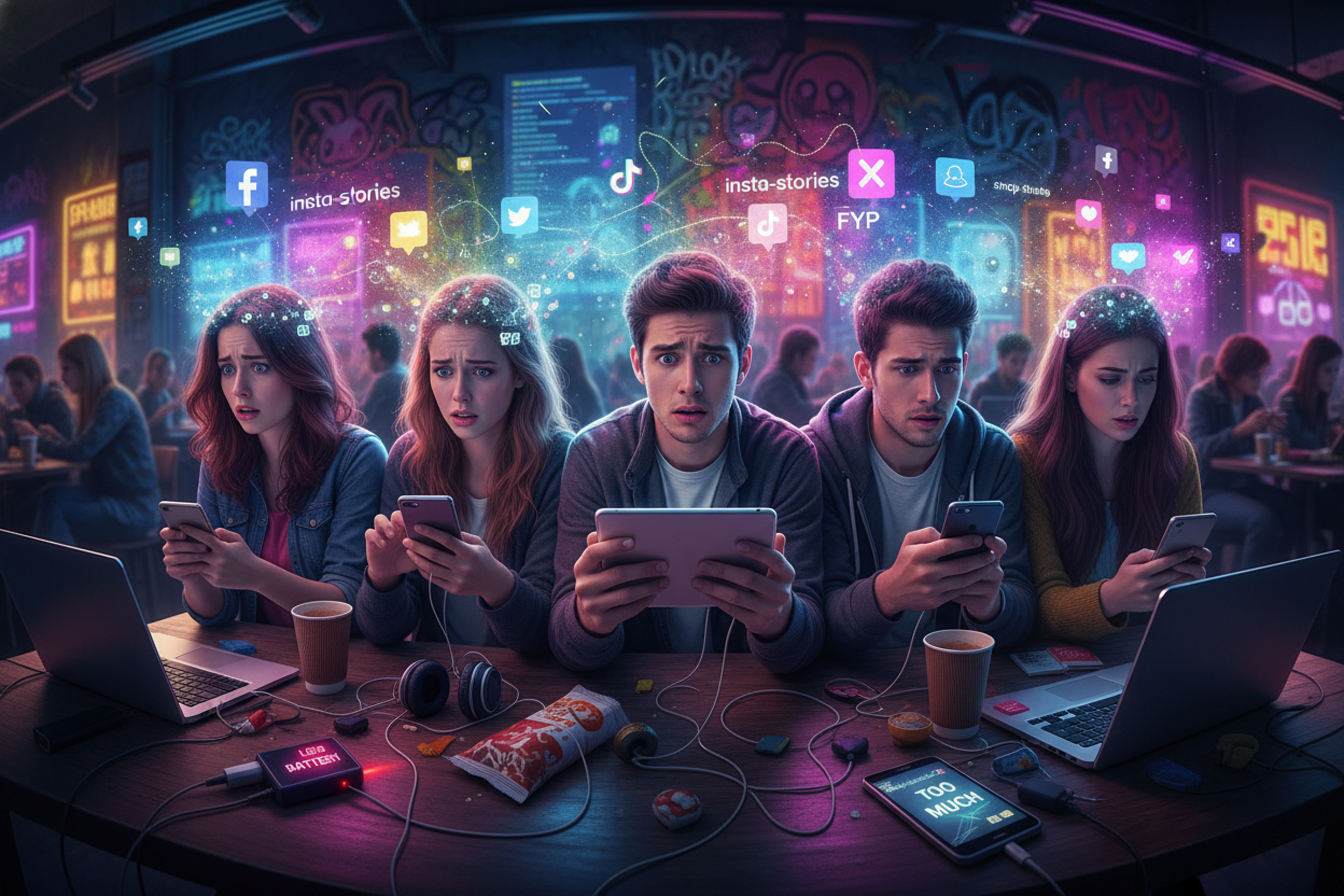
Because this generation has grown up in a world unlike any before it, a world moving at extraordinary speed, full of contradiction, noise, pressure, possibility, distraction, and uncertainty.
As someone who has worked with young adults for over 30 years and as a mother of three children in this age category, I do not recognise the narrative that young people are lazy, unwilling, or unmotivated.
In fact, I have never met a young person who genuinely wanted to do nothing.
What I see instead is overwhelm.
Young people today are trying to build an identity in a world where the rules keep changing. They are told education matters enormously, while simultaneously hearing that AI may make many traditional career paths obsolete. They are more connected than ever, yet increasingly isolated. They have access to endless information, yet struggle to know which voices to trust. They are warned about smartphones and social media while living in a society completely built around them.
And perhaps most confusingly of all, they are exposed daily to a culture that often sells success as instant, effortless, and glamorous.
Become a millionaire from your bedroom.
Build passive income overnight.
Skip the hard road.
Hack the system.
Meanwhile, the real human skills that create resilience, direction, confidence, and independence still develop the same way they always have: slowly.
There is no app for self-awareness.
No shortcut to confidence.
No AI tool that replaces life experience.
No algorithm that can build emotional resilience for you.
The ability to manage money, regulate emotions, communicate clearly, tolerate discomfort, plan ahead, recover from setbacks, and build meaningful relationships are still developed through experience, challenge, feedback, and trial and error.
And that process takes time.
Technology itself is not the enemy. I am not anti-AI, anti-phone, or anti-progress. The future absolutely includes technology, and young people need to learn how to use it effectively.
But we cannot ignore what constant exposure to distraction is doing to developing minds.
In his excellent book ‘Stolen Focus’, Johann Hari argues that our attention crisis is not simply personal weakness, but the result of powerful systems deliberately designed to keep us engaged, distracted, and emotionally hooked.
That resonated deeply with me.
Because many adults struggle with this too. We check our phones compulsively. We lose focus. We feel mentally fragmented. So it is hardly surprising that young people, whose brains are still developing, find this even harder to navigate.
The prefrontal cortex, responsible for executive functioning, continues developing well into early adulthood. This affects planning, emotional regulation, decision-making, attention control, and communication.
In other words, the exact skills needed to navigate modern life successfully are still under construction during the years we expect young people to make enormous life decisions.
And yet our education systems are still largely built around curriculum delivery and measurable outputs, while many of the human skills required for modern adulthood remain underdeveloped.
We teach students what to think about.
Far less often do we teach them how to think clearly, communicate effectively, debate respectfully, evaluate information critically, manage uncertainty, or speak with confidence.
Yet these are the skills that help people move out of isolation and into participation.
Communication, in particular, cannot be underestimated.
The ability to articulate what you are struggling with.
To ask for help.
To express an idea.
To present yourself in a room.
To debate.
To connect.
To explain your thinking.
To recover after failure.
To contribute.
These are not “soft skills”.
They are life infrastructure.
And increasingly, they may become the very skills that distinguish humans in an AI-driven future.
This is one of the reasons I created The Human Voice Project, a field research and communication initiative exploring how we can place human communication back at the centre of education and development.
Not because communication solves everything.
But because communication opens doors.
It helps young people discover who they are. It helps them connect with others. It builds confidence gradually. It strengthens thinking. It encourages participation rather than withdrawal.
Most importantly, it reminds young people that their voice matters.
We are living through one of the fastest periods of societal change in history. Education, organisations, and governments are facing enormous challenges. There are no simple answers.
But one thing feels increasingly clear to me:
If we want young people to navigate the future successfully, we cannot focus solely on qualifications, productivity, or technology.
We also need to rebuild the human toolbox.
Because behind every statistic is a young person trying to find their place in a rapidly changing world and most of them are not looking for an escape route.
They are looking for direction, meaning, confidence, belonging, and a way to contribute.