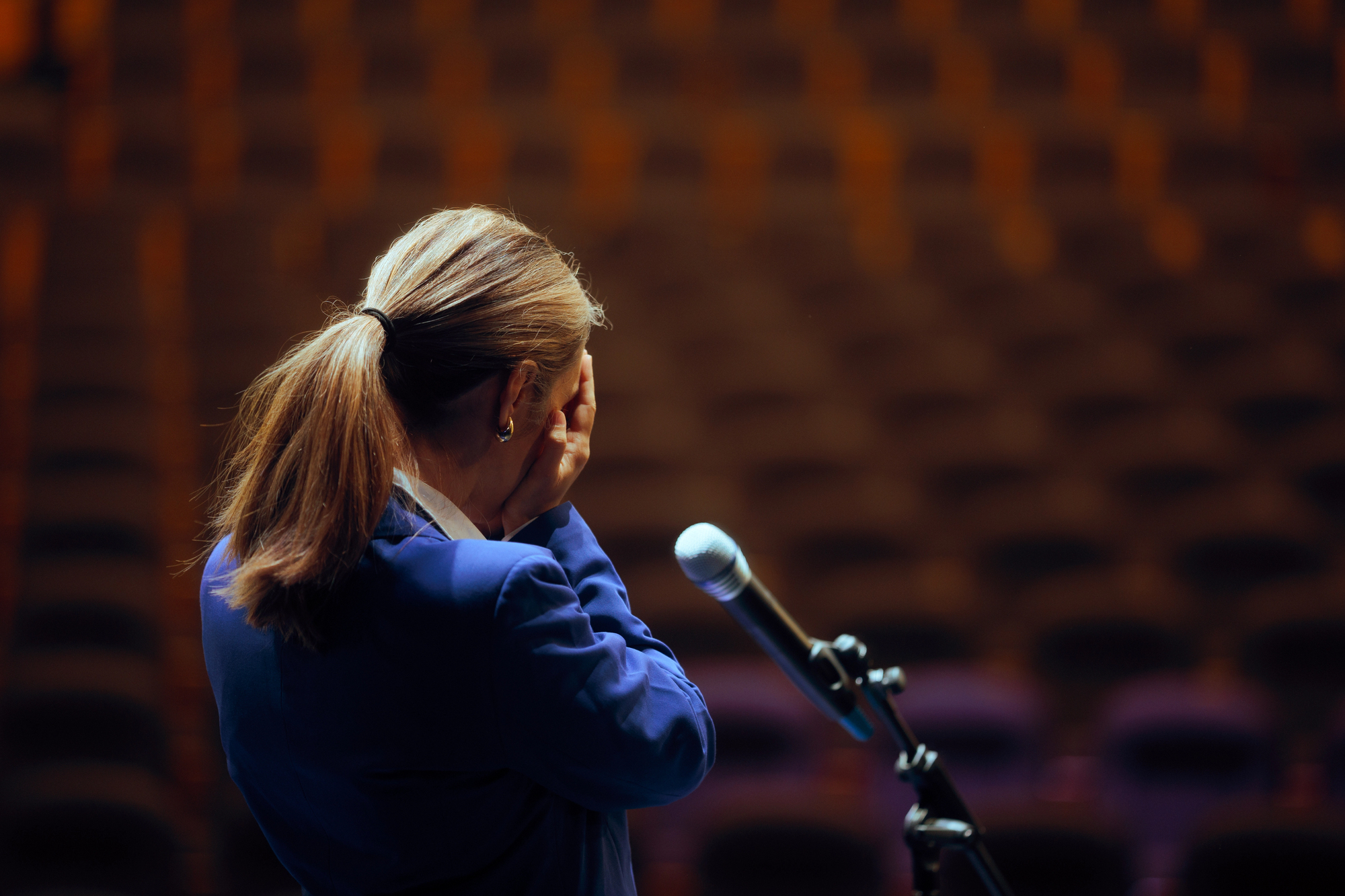
The Silent Epidemic: Why Fear of Public Speaking Is Holding Millions Back
There is a quiet, global problem we don’t talk about enough.
It doesn’t show up on sick notes.
It isn’t always visible in meetings.
And yet it shapes careers, confidence, and life choices every single day.
Fear of public speaking.
Not stage fright in the theatrical sense.
Not nerves before a keynote.
I’m talking about the fear that makes people:
- stay silent in meetings
- avoid opportunities they’re qualified for
- decline promotions
- dread interviews
- rehearse sentences endlessly — and still not say them
And it’s far more widespread than most people realise.
Public speaking consistently ranks among the top fears worldwide.
Around three out of four people report anxiety when speaking in public.
One in three say job interviews are their most anxiety-inducing speaking situation.
Even online, over half of people would go to great lengths to avoid presenting.
This isn’t a niche issue.
It’s a systemic one.
And it’s holding people back — everywhere.
We Treat Public Speaking Like a Talent. Not a Skill.
One of the most damaging beliefs around public speaking is this:
“Some people are just naturally good at it.”
As if confidence is genetic.
As if clarity is luck.
As if presence is reserved for actors, politicians, or extroverts.
It isn’t.
Yes, some people feel more comfortable early on.
But comfort is not competence — and discomfort is not inability.
Public speaking is a learned, trainable, progressive skill.
Like writing.
Like driving.
Like playing an instrument.
Yet we don’t treat it that way.
Why Isn’t Public Speaking Properly Taught?
Most education systems still prioritise written communication over spoken communication.
Read.
Remember.
Repeat.
Speaking is often treated as:
- a by-product of writing
- a one-off presentation
- a performance at the end, not a skill built along the way
There are very few consistent frameworks that teach:
- how to structure thought out loud
- how to manage nerves before they escalate
- how to use voice, pause, rhythm, and body language intentionally
- how to speak without memorising or panicking
Instead, students are often asked to “just present”.
For someone already anxious, that can feel less educational — and more like exposure without support.
Add to that:
- overloaded curricula
- teachers under time pressure
- educators who were never taught these skills themselves
And we reinforce a dangerous myth:
“If you’re not good at this by now, you never will be.”
The Cost of Silence
Because fear of speaking doesn’t only show up on stages.
It shows up in:
- boardrooms
- job interviews
- networking events
- virtual meetings
- classrooms
- everyday conversations where something should be said
People with glossophobia often avoid visibility — not because they lack ideas, but because the cost of speaking feels too high.
And when people stay silent:
- organisations lose insight
- leadership pipelines narrow
- innovation slows
- diversity of thought disappears
The loudest voices are not always the most capable ones.
They are simply the least afraid to speak.
Public Speaking Is Not About Performing. It’s About Liberation.
This is where the narrative needs to change.
Public speaking isn’t about being impressive.
It’s about being expressive.
It’s about:
- finding your voice
- trusting your thinking in real time
- learning how you communicate
- standing behind your words without apology
When taught properly, speaking skills:
- reduce anxiety over time
- build confidence that transfers into life
- create self-awareness
- sharpen thinking
- strengthen decision-making
And yes — they unlock creativity.
Language.
Rhythm.
Silence.
Tone.
Movement.
Intention.
These are not “soft skills”.
They are life skills.
We Need More Voices — Not Fewer
Public speaking is not just for leaders on stages.
It’s for:
- people with lived experience
- people with different accents
- people who think differently
- people who’ve been told they’re “too quiet”
The world doesn’t need fewer voices.
It needs more variety, more nuance, more humanity.
When only confident speakers are heard, we don’t get the full picture — we get the loudest slice of it.
Teaching public speaking early, gently, and progressively — at all ages — isn’t about creating performers.
It’s about creating people who are not afraid to be heard.
This Is a Skill for Life
You don’t outgrow the need to speak.
You grow into it.
At school.
At work.
In relationships.
In moments that matter.
Public speaking is not a personality trait.
It is not a gift.
It is not reserved for the few.
It is a liberating skill — and it should be taught as such.
Silence is expensive.
Voice is powerful.
And learning how to use it changes everything.
If this resonates, I’d love to hear your experience.