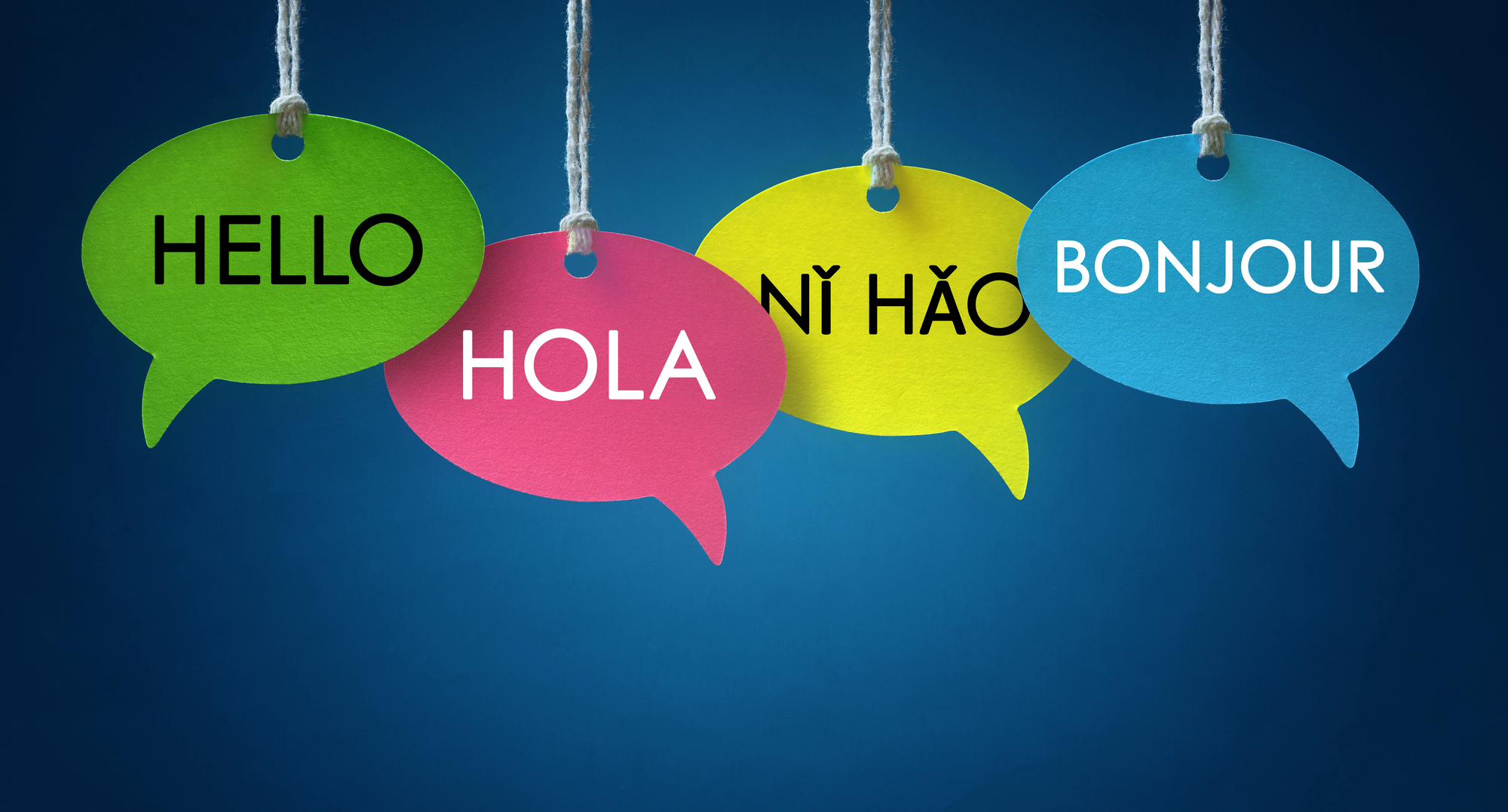
Speaking Another Language Is More Than a Skill. It’s a Way of Seeing.
We live in a world of instant translation, voice notes, and AI-generated language.
And yet, learning to speak another language has never mattered more.
Because language isn’t just about words.
It’s about voice, identity, and how we connect as humans.
There are countless quotes about this — and they endure for a reason…
“One language sets you in a corridor for life. Two languages open every door along the way.”
I’ve always loved this quote, not because it sounds poetic, but because it’s profoundly true.
In a world that is increasingly connected, fast, and fragmented, speaking another language is no longer a “nice extra”. It’s one of the most human, eye-opening skills we can develop.
Yes, we now have mobile phones.
Yes, we have instant translation.
But no app will ever replace what happens when you step inside a language.
“I thought I could speak English…”
My mother tongue is Dutch.
At school, I learned French, German, and English.
By the time I moved to the UK at 19, I genuinely believed I could speak English.
I was wrong.
Like most language education, my learning had focused heavily on grammar, reading, listening, and writing — and far less on speaking. So when I arrived in London, I struggled. A lot.
I felt incompetent.
Exposed.
And painfully alone.
I lived in the UK for 26 years. I caught up. English eventually became my dominant language.
And over the past few years, I’ve been learning Spanish — which, as an adult, is a completely different ball game.
Learning a language later in life comes with psychological obstacles no textbook prepares you for:
fear of sounding foolish, perfectionism, comparison, impatience.
And yet — it’s endlessly rewarding.
Why speaking another language is such an advantage
From my own experience, learning and using another language delivers wins in three powerful ways.
1️⃣ It unlocks real connection
Speaking someone’s language — even imperfectly — signals something important:
“I see you. I respect your culture. I’m willing to meet you halfway.”
You can converse, yes.
But more importantly, you connect.
You don’t just observe a culture from the outside in — you experience it from the inside out.
Local people hold valuable keys. To nuance. To humour. To history. To meaning.
In a world that’s speeding up and fragmenting, a foreign language is a key that opens doors, borders, minds, and possibilities — in ways technology never will.
2️⃣ It teaches you more about yourself than you expect
A language isn’t just vocabulary.
It’s a pattern.
A rhythm.
A worldview.
It’s steeped in cultural references, family structures, humour, values, and history.
When you learn another language, something surprising happens:
you deepen your relationship with your own language too.
They strengthen each other.
You become more adaptable. More flexible. More aware of how meaning is constructed — and lost.
There will be struggle. Humility. And many aha moments.
One of my first Spanish teachers said something I’ve never forgotten:
“Communication is about passing a message. One person sends it, the other receives it.
If there is understanding, the exchange is successful.
Speaking correctly — and quickly — comes later.”
That sentence alone removed years of pressure.
3️⃣ It reconnects us to the human voice
Against the backdrop of automation and AI, learning another language opens your eyes to the diversity, complexity, and beauty of the spoken world.
Accents. Tone. Rhythm. Emotion.
All things technology can mimic — but never inhabit.
More than ever, the world is an international stage.
Language fluidity matters.
But even more than that, the human ability to understand one another, translate nuance, and collaborate on complex issues matters.
This is something no machine can replace.
Speaking and presenting in a second (or third) language
Many people already live this reality. They work, present, and negotiate daily in a language that isn’t their first.
I deliver speeches in English, Dutch, and Spanish.
It can be nerve-wracking — and over time, incredibly rewarding.
A few principles that help:
- Be crystal clear about why you’re speaking and what your message is
- Avoid complex or unnecessary words (the goal is clarity, not impression)
- Keep sentences shorter
- Rehearse more than you think you need to
Many years ago, after giving a speech in English, I received feedback that said:
“Kirsten speaks simple English.”
I was hurt.
Only later did I realise it had been my superpower.
It made me clear. Accessible. Effective.
And yes — I’d like to think my English has evolved since then.
Final thought
Speaking another language isn’t about sounding clever.
It’s about curiosity. Courage. Connection.
It’s about stepping into discomfort long enough to discover that the world — and you — are far richer than you imagined.
And once you’ve lived that, no translation app can ever compare.
“To have another language is to possess a second soul.”
4 How to Write a Speech (Any Speech)
Before I write a speech, I collect them.
I always carry a notebook — a physical one — and I also have a designated place on my phone.
I scribble down funny incidents, moments of friction, small observations, stories with humour, or moments that carry a quiet lesson.
Not because I know exactly what speech they’ll end up in —
but because good speeches rarely start at a desk.
They start in real life.
Start with the message — or let it emerge
Often, the strongest place to begin is with the message.
One of the biggest mistakes people make when writing a speech is trying to figure out what they want to say at the very end.
A speech isn’t a performance of words.
It’s a gift to an audience.
So before you write a single line, it helps to ask two essential questions:
What do I want to give the audience?
And why now?
Relevance matters.
Timing matters.
Context matters.
If there’s nothing meaningful in it for the audience, why give the speech at all?
But — and this matters — not every speech starts this way.
Sometimes the process begins with a story.
A moment you know you want to share.
Something funny, surprising, uncomfortable, or revealing.
In those cases, the message doesn’t lead — it emerges.
The key difference is this:
you’re allowing meaning to surface through the story, not forcing it on afterwards.
What doesn’t work is trying to retrofit meaning once the speech is already written.
The audience feels that immediately.
Whether you start with the message or the story, the intention has to be alive from the start.
Gather the puzzle pieces
Once the direction is clear — whether defined or emerging — the next step is how you’re going to bring it across.
This is where the puzzle pieces come in.
Examples.
Anecdotes.
Personal experiences.
Moments that illustrate rather than explain.
At this stage, it’s always better to write more than you’ll eventually use.
Writing isn’t about getting it right the first time.
It’s a process of refining.
Or, as Michelangelo famously said:
“I remove the unnecessary from the stone.”
He believed the sculpture already existed within the marble — the artist’s job was simply to remove what didn’t belong.
Speechwriting works the same way.
Speak it sooner than you think
Once you have a rough outline, don’t stay on the page.
Speak it.
Out loud.
This is where clarity appears.
You’ll notice where you repeat yourself — and repetition usually weakens a message.
You’ll hear where transitions don’t quite land.
You’ll feel whether the speech actually builds toward the moment you want to leave behind.
Remove complicated sentence structures.
Cut words that are hard to pronounce.
Make the language yours.
A speech should sound like you, not like writing.
Stand up and embody it
The final stage isn’t about memorising words.
It’s about internalising intention.
Stand up.
Move.
Feel where emphasis belongs.
Notice where a pause is more powerful than another sentence.
This is where the speech stops being text and becomes communication.
Think of it like creating an artwork:
layers, revisions, refinement — always returning to the same question:
Why am I saying these words in the first place?
Final thought
A strong speech isn’t clever.
It’s clear.
It doesn’t try to impress.
It tries to connect.
Whether you start with a message or with a story, what matters is honesty of intention — and respect for the audience.
Get that right, and the words will follow.